

Even though our immigration story continues to inspire my writing, German Christmas markets are king when it comes to plot bunnies. The Fall of the Mantle holiday called Natalistide is proof of that! And as we enter the holiday season IRL, my heart fills with memories of that time, so let’s chat about it today. 😊
I cobbled the holiday’s name together from the given name Natalia, which means ‘Christmas’, and I borrowed the ‘tide’ from Yuletide. I doubt I could be more on the nose with this one.
The holiday didn’t exist in earlier versions of the book, but I redrafted the manuscript soon after we arrived in Germany, and the way they do Christmas blew my mind.
South Africa has a summer Christmas, which means meals of barbeque (or as we call it ‘braai’) and salads, watermelon slices for dessert, and days spent splashing in the pool. These days, more houses display exterior lights or lawn ornaments, but seasonal decorations aren’t the cultural norm we’ve experienced in other countries.
The German tradition of lights in almost every window and garlands on every door blew us away. Then, the famed Christmas markets set up shop, and the whole experience levelled up.
We lived near CentrO, one of the biggest malls in Europe. People drive from Belgium and the Netherlands to shop there, so the market in the square outside the mall is a big deal. They set up stalls like the wooden huts you’d expect in fairy tales, with little mushrooms and woodland creatures, merry decorations, and glittering lights.
Each town hosts their market around the town plain, but the bigger cities, like Düsseldorf, Cologne, or Munich, have multiple markets. In some places, markets spread across every available space and link up to become massive ongoing centres of holiday commerce. Such joint markets inspired Middwold, a city through which Cara and the others travel to the slums. It’s a collection of outdoor markets and bazaars connected via small streets.
Some Christmas markets include fair rides and tubing slopes, have claims to the largest Christmas trees, the greatest variety of glühwein in the province, or whatever other speciality. They all felt strangely unique, and we enjoyed visiting different ones.
Of course, some features are present at every Christmas market.
First up, beer.
In Germany, beer is less expensive than water, and there’s a refund on each can. There is also no law barring the use of alcohol in public places, and with a parent or guardian present, the legal drinking age for beer is 14 or 16 solo.
Each market has beer-drinking areas scattered throughout, mostly in the open, though some are located inside heated tents or bar-like wooden huts (not including the additional stalls selling glühwein or spirits).
A quick side note: German drunkards typically ignore other marketgoers, and fights stay confined to the designated drinking areas. We never had any problems with drunk folks during our time there.
Anyway, beer culture inspired Nathan’s throwaway comment about sleeping off hangovers when he finds a pair of guys passed out underneath a table.
I also borrowed the idea of eating areas directly from the Christmas markets. Most markets sport standing tables littered throughout the grounds. The tables are typically chest-height, just tall enough so someone could rest their arms on the surface and lean underneath the small roofs attached to each table. Drizzle, sludge, and spilt beer keep everything wet or icy, so seats aren’t a popular feature (though some larger markets do offer them).
All markets are directly adjacent or connected to at least one train station, which means an influx of crowds. And I mean crowds. We lived in the fourth most densely populated area in the world. Germany isn’t as spacious as many other countries, but it contains masses. And they all rock up for the Christmas markets. Any excuse to hang around the city plains, especially if there’s beer.
During weekends, markets became a stampeding ground, and I included that in A Study of Ash & Smoke. Cara and Nathan spend some time navigating the crowds, and both have a hard time moving through the ‘currents’ of people.
I’m not as short as Cara, but I’m much shorter than the average German, so I often felt unnoticed as people continued on their merry way. Jan is about a head taller than me, but still struggled to weave in and out of the crowds. So, it should come as no surprise that my favourite time to visit the markets was while everyone else was at work.
My absolute favourite thing about the markets, and this is another they all have in common, is the smell. The scent of roasting almonds hits you as you exit the train, and your mouth will water as you reach the market.
Nobody does roasted or candied almonds like Germany. You’ll find multiple stands with various flavours, anything from strawberry to pistachio to vanilla liqueur. Nathan satisfies his sweet tooth with a packet of candied almonds while he visits the Natalistide market.
The one thing I didn’t include in Ash & Smoke’s market is the German staple of bratwurst and rolls. The scent of barbecuing sausages is still one I associate with any market or fair in Germany, and we often enjoyed this lunch. But I felt that bratwurst screamed Europe and wouldn’t add to the aesthetic I was trying to create for Aelland, AKA the UK, so I left it out.
Finally, the city décor is wonderful. The flickering lights spread much wider throughout German cities than just the markets, and with the houses and apartments also made up, everything is bright and cheery. Canada has that in common with Europe, and I love it. The lights brighten up what is otherwise a pretty monochrome winter landscape.
Germany has a lot of winter drizzle. Some areas experience heavier snowfall (Bavaria, for example) but Nord-Rhein Westphalia only had the odd snow day. Constant drizzle paired with sub-zero overnight temperatures cause a lot of ice. The days are short, and thanks to the constant drizzle, we experienced long stretches without even a glimpse of sunlight. So, as you can imagine, winters there tend to be grey and dreary.
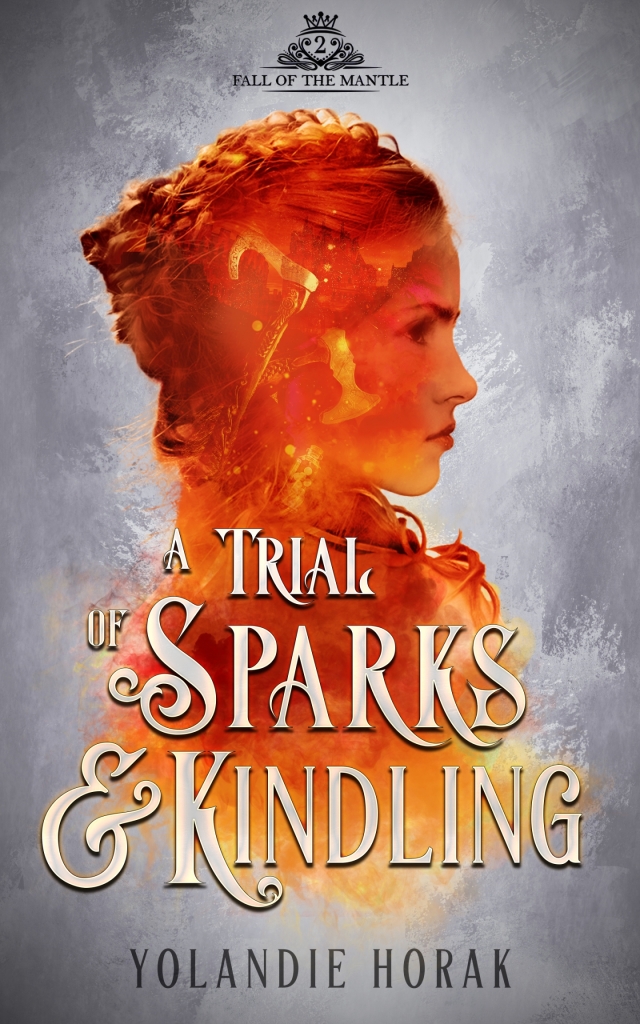
I drew inspiration from German weather while writing Collinefort, which we visit in A Trial of Sparks & Kindling. It’s constantly damp, with constant drizzle that drives Varda to her wits’ end. However, Collinefort sees more snow than we ever did in Germany, thanks to our time spent in Toronto. There, proximity to water equals humidity, a wetter kind of snow, and colder, icier winds.
Calgary’s winters are drier, with massive snow dumps. There is blue sky, but the ground cover can last for months, and short winter days can also cause dreariness. And that’s why I appreciate the holiday decorations so much.
I wanted to include that in my books, even if just here and there. I imagine things must be pretty same-y to the people of Aelland. Maybe not grey, but the lack of elements must definitely negatively influence their mental health, and they’d probably do what they can to cheer things up a bit.
Also, the nobles of Roicester are flashy and always display their abundant wealth, so it makes sense that they’d want a pretty playground. For example, when Nathan visits Pointy’s house during the holidays, we see how the nobles deck out their houses for the holidays.
I’ll wrap up this post with that thought. Let me know if you’d like to learn more about the other holidays in the Fall of the Mantle series. 😊
Until next time.
Yolandie



 Yolandie Horak
Leave a reply to How Immigration Influences My Writing – Yolandie Horak Cancel reply