

Planning a novel doesn’t always come easily. As a hybrid planner/pantser and an ADHD’er, I often find myself super excited at the beginning of the planning process, pouring myself into putting every minute detail to paper. Until the impatience sets in, at which point I must write.
Once I’ve abandoned the planning, I hurl myself head-first into the story, and nothing (and I mean nothing) can pull me out of it until it’s complete.
But my current project is the third instalment in a series with five planned books. At this point, there is just so much to remember. Events from Books One and Two, foreshadowing that can’t be left out, and plotlines to resolve.
Not only that, but the political, medical, and spy-driven story arcs of the Fall of the Mantle universe make for loads of convoluted facts. My brain is a sieve on the best of days. Don’t think that because I come up with this stuff I can effectively remember all of it (or any of it 😅). Thankfully, my ADHD meds have been a HUGE help. I still don’t know how I managed to write the other books in this and older series without it.
If you’re new here (welcome!), checking out my March Writing Update post will recap you on my writing process. You can also follow links to key events in the Book Three writing journey. If you’re willing to dig through the blog archives, check out my first post about novel planning. Back then, A Study of Ash & Smoke was called The Physician’s Apprentice, and A Trial of Sparks & Kindling didn’t have a title.
I could certainly complete my planning in Excel, as I’ve done for years, but something about A Curse of Venom & Scales demanded a pen in my hand and ink on paper. You know, in the same way it has required a blood sacrifice and a bottle filled with tears for each month this book hasn’t been completed. Nothing major. 🤣
I won’t lie, this was a lot of work.
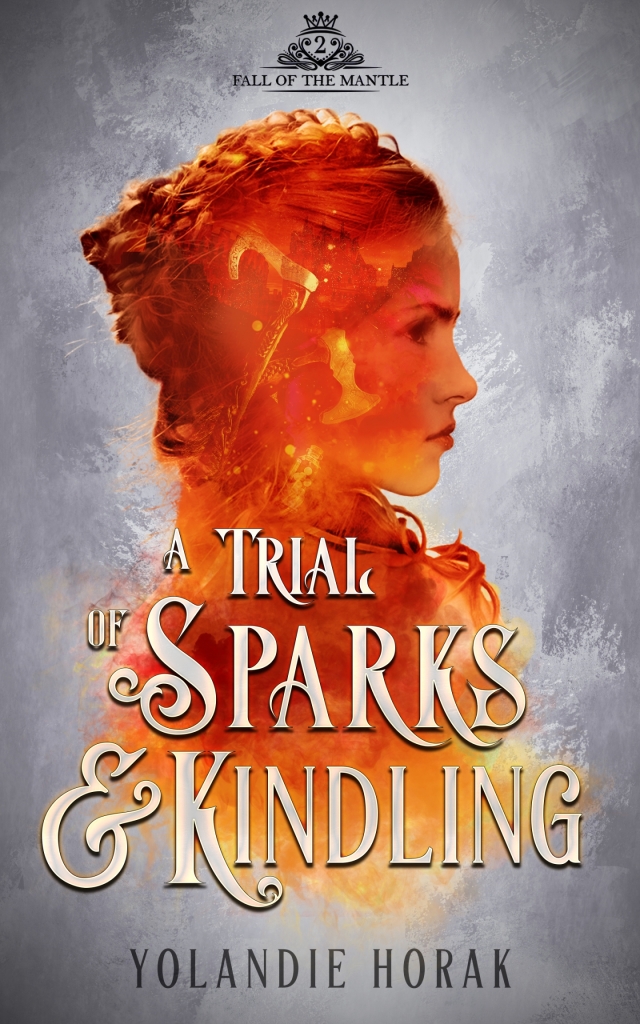
Fall of the Mantle features a large cast. A Study of Ash & Smoke has five viewpoint characters, while A Trial of Sparks & Kindling and A Curse of Venom & Scales have six each. And though some characters die or move on from the story, each subsequent book adds more faces to the cast.
And even though I wrote these characters, I don’t always remember what they look like, what their quirks or speech patterns are, or how they’ve changed during the series. Some characters look physically different due to injuries or style changes, while others have picked up quirks along the way.
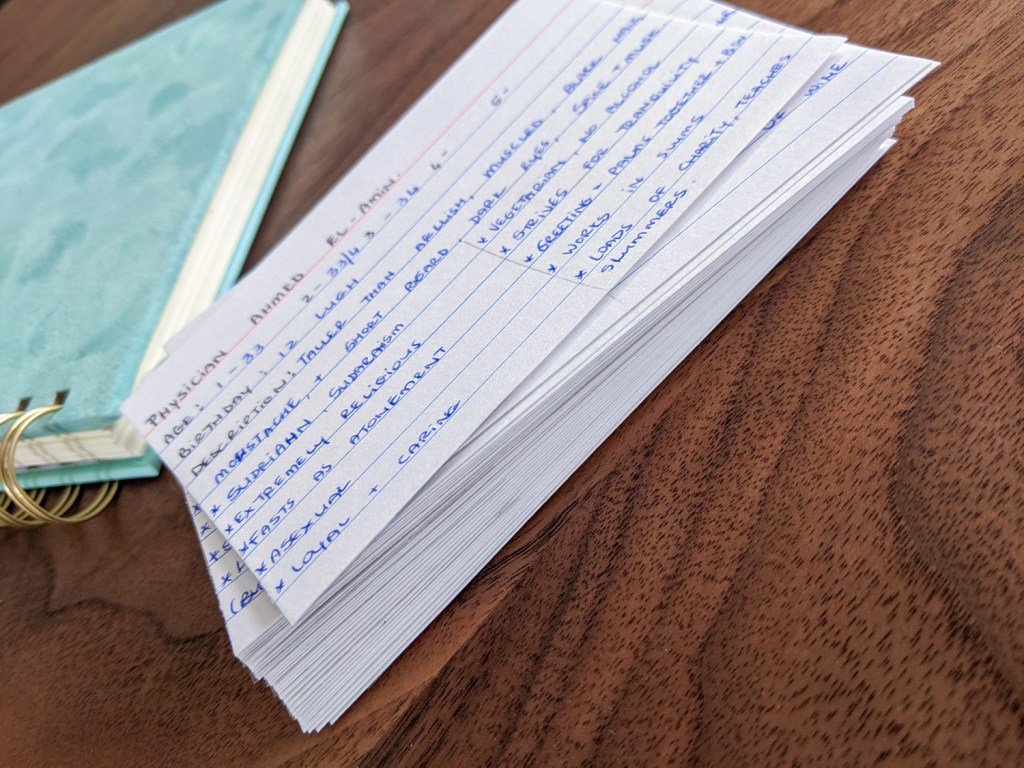
Keeping track of all these changes inspired me to index each character on cute cue cards I purchased from our local Dollar Store.
I can keep track of the ages of characters in each book, birthdays if they are relevant, descriptions, and facts that I need to reference on the fly. For example, Pointy has a small scar on his cheek that acts like a dimple when he smiles, but I can’t remember for the life of me on which cheek I’ll find that scar. With the index cards, that information is right there, on my desk.
And because the cards are small, they don’t take up too much space.
I also used the AI-generated portraits of each character on these cards. It’s just a quick reminder of their most important physical traits (though they admittedly don’t all look exactly as I picture them).
For reference, I’ve left Cara and Ahmed’s index cards (mostly) unblurred, but I’ve blocked out the rest of the cast’s information to keep this post spoiler-free. However, I will say that anyone who can decipher my handwriting deserves to know the spoilers. 😋 Also, here are some faces you don’t know from Books One and Two!


The index cards are great for keeping track of character facts, but don’t offer what I need for more complex information. Enter part two of my new planning method.
Like all the writers I know, I’m obsessed with pretty notebooks. And like all the writers I know, I’m too afraid to write in said pretty notebooks. My house can hold no more pretty yet eternally empty notebooks. It’s a plague.
The cure? Use the notebooks.
My spreads currently include lists of characters and the page numbers of their descriptions in the printed books; glossaries of words, plants, and sayings in the Fall of the Mantle universe; Intelligence codes, codenames, and operations; lists of important events in each book and their page numbers in the print copies; and more.
I honestly don’t know why I didn’t create these lists years ago. Until now, I’ve used a million tiny bookmarks opening to plot-defining events in the print copies of Books One and Two, but it still takes time to find the correct bookmark. Thankfully, the ease of referencing lists of plot-defining events in the rest of the series saves so much time!


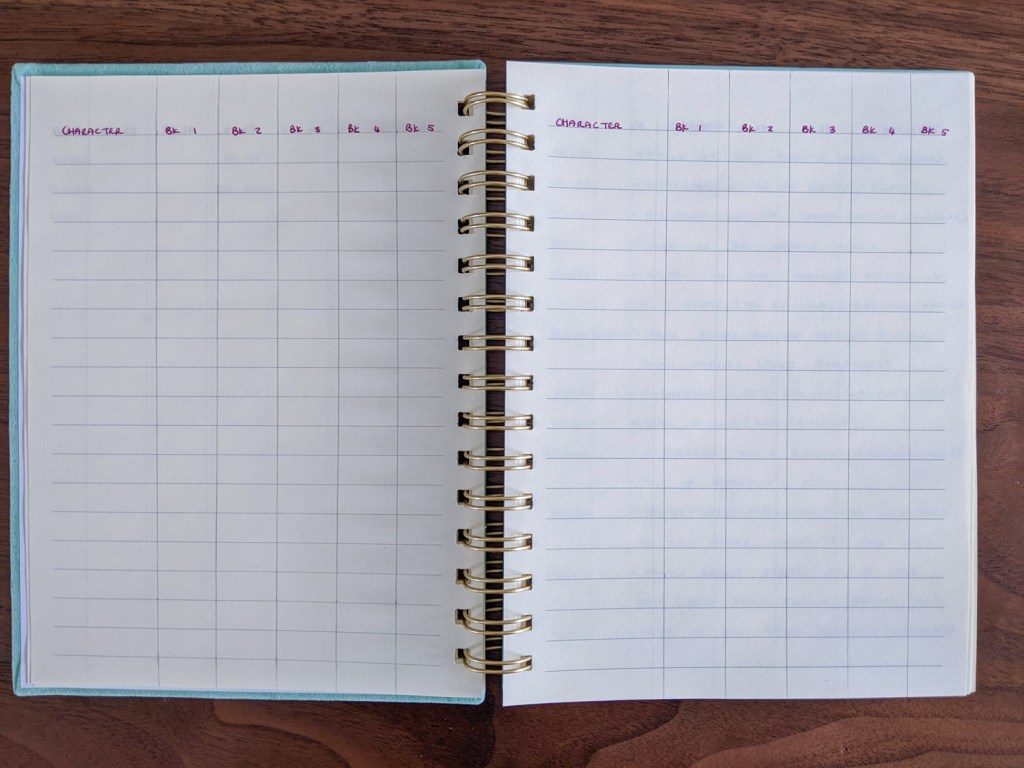
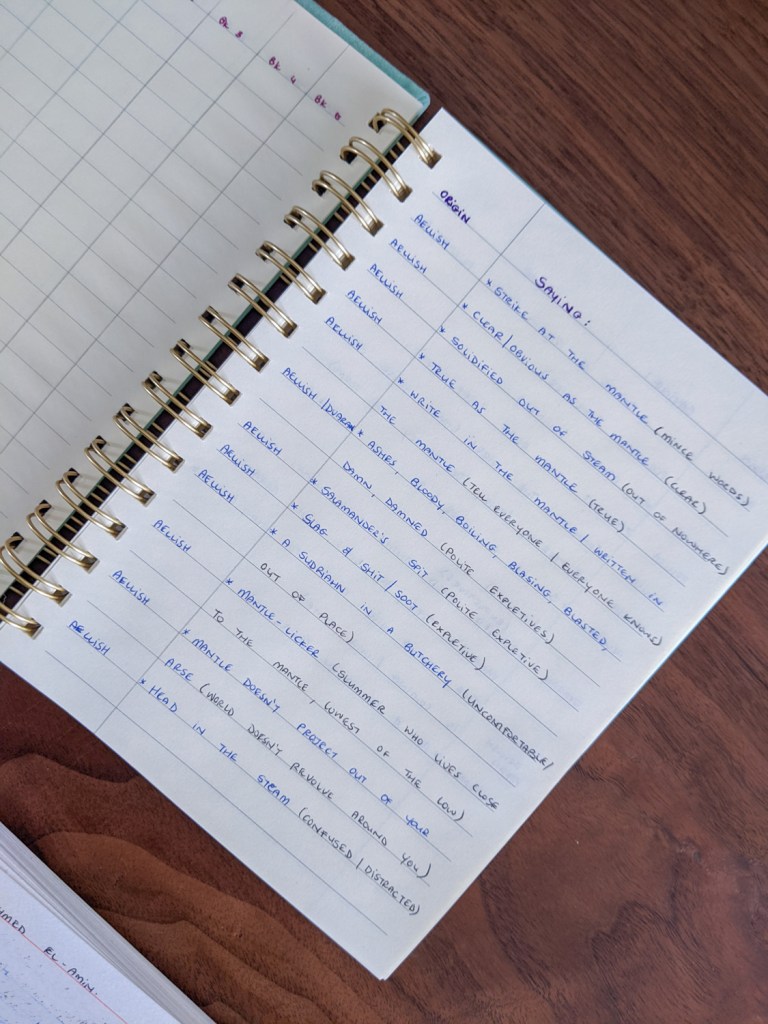


I’ve also tested out the index cards and lists as a planning method for The Other Project, and I can already tell this method will keep my interest. I’ve even planned scenes on cue cards. Each scene represents a chapter, but the fluid nature of the cards allows me to change the order of events or add, remove, and alter scenes as necessary. Meanwhile, I can continue to index (and therefore plan) characters as they join the cast. I don’t have to plan every little detail before I begin writing the story, which compliments my style.
This simple indexing system has streamlined my writing process, and I’m really excited to keep refining it.
How do you plan your novels? Let’s chat in the comments!
Until next time.
Yolandie




 Yolandie Horak
Let’s Chat!